
In cooperation with the Competence Center MADE and the
Piano Nazionale di Ripresa e Resilienza (PNRR) – Missione 4 Componente 2 (M4C2) – Investimento 2.3 – Potenziamento ed estensione tematica e territoriale dei centri di trasferimento tecnologico per segmenti di industria
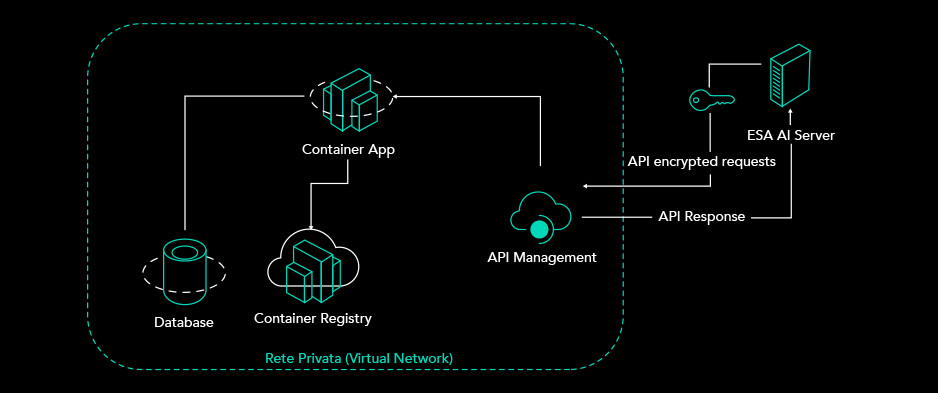
ESA has developed a project focused on applying configuration themes and software functionality development based on AI concepts. This has led to the creation of an AI layer designed to enable facilitation features in the development of the human–machine interface (HMI).
The solution developed by ESA includes functionalities for processing user requests starting from natural language or graphical inputs, enabling the generation of project pages with improved usability, as well as the creation of user scripts.
This AI layer is an integral part of ESA’s next-generation HMI design architecture.
Below are the main improvements that the use of AI technology can bring to the project.
Increased Operational Efficiency
- Automation of repetitive tasks: Features such as the automatic generation of HMI layouts or data-processing scripts drastically reduce the time required for tasks that would typically involve manual effort.
- Reduction of human error: Thanks to automation and data-driven intelligence, operations become more reliable, with fewer inconsistencies in system design and logic.
- Custom code generation: The ability to generate SQL queries or scripts directly from text speeds up the development process, especially for less experienced developers or teams with diverse skill sets.
- Extensibility: The ESA AI Framework introduces an application layer that not only enhances current functionalities but also makes the framework more scalable and adaptable to future needs.
Competitiveness and Innovation
- Alignment with market trends: The adoption of AI in areas such as HMI is key to remaining competitive, especially as many companies are already investing in similar technologies.
- Distinctive capability: The inclusion of AI-driven features, such as automatic layout and query generation, can become a differentiating factor for the company’s framework compared to competitors.
- Future readiness: Feasibility analysis for metalanguages and other advanced features positions the company as a leader in the digital transformation of the HMI sector.